Nov 14, 2025
Document AI: The Next Evolution of Intelligent Document ProcessingPersona
Industry
Use cases
Underwriting OCR
[ Underwriting OCR ]

Use LlamaParse to turn messy underwriting PDFs into validated fields with confidence scores and citations.
The USP

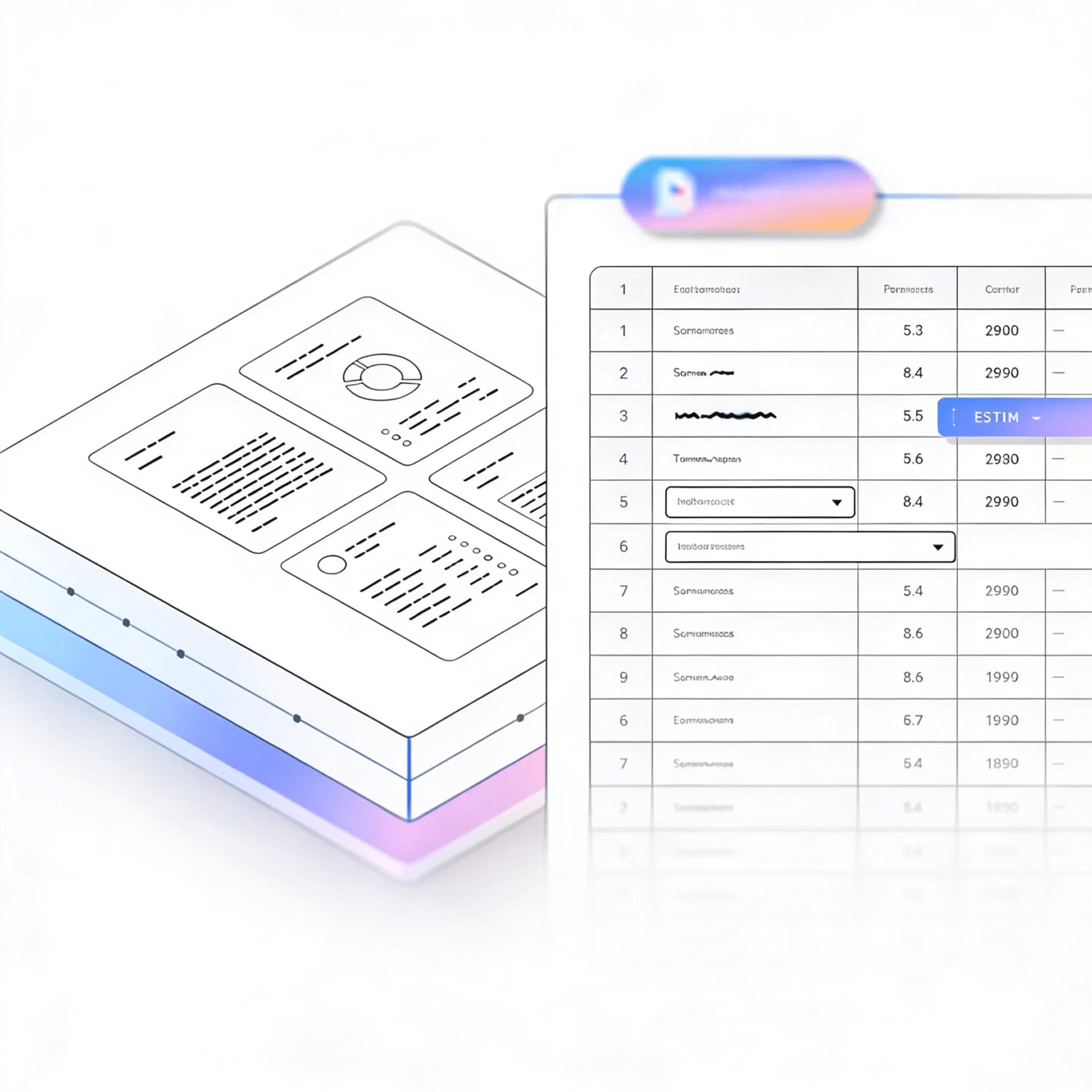
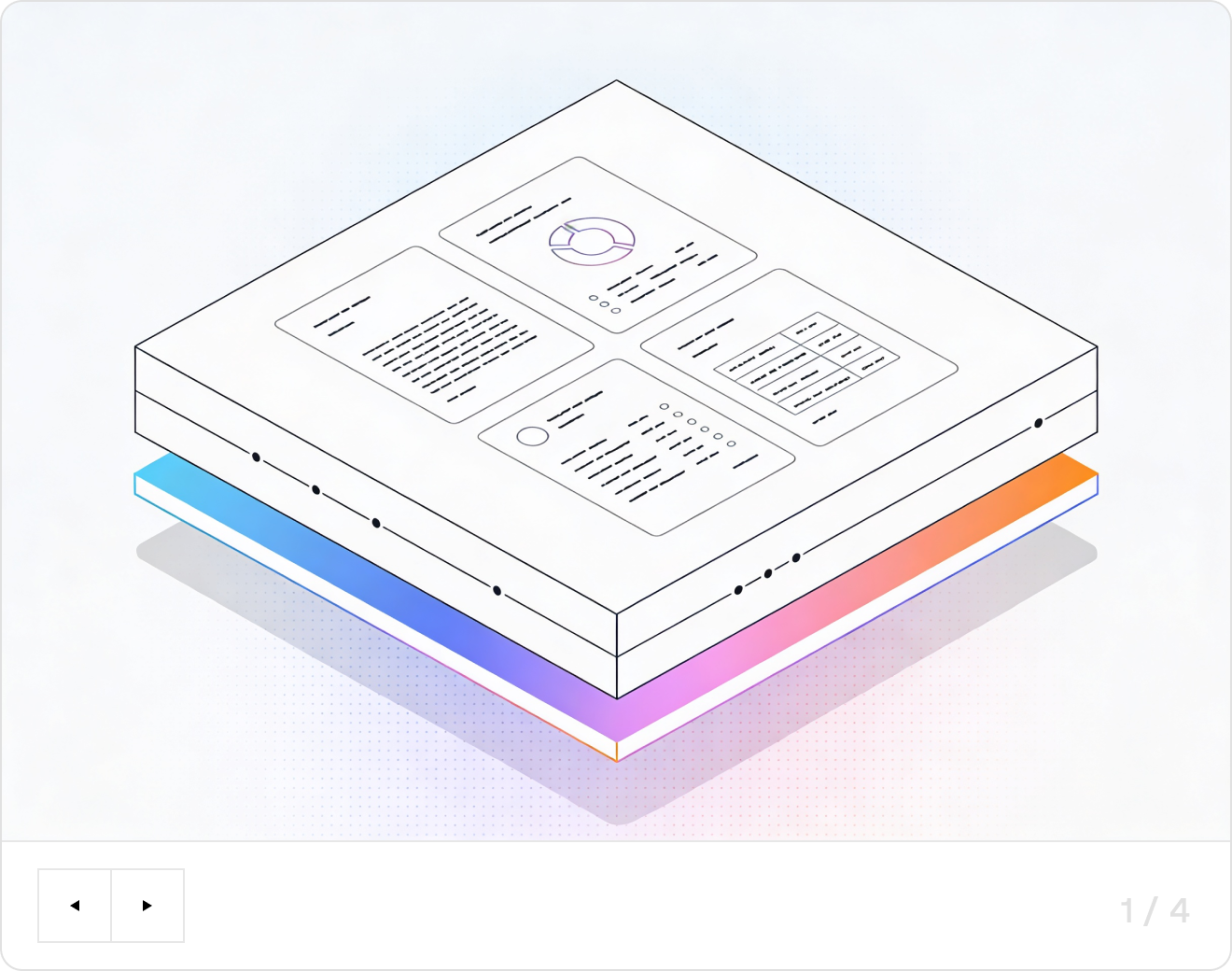
LlamaParse turns messy submissions, loss runs, and prior binders into clean JSON or Markdown you can trust for underwriting decisions. Agentic parsing understands layouts, tables, and embedded visuals, then adds citations and confidence signals so your team can validate fast.
Built for Complexity

Use LlamaParse in LlamaCloud to parse loss runs, ACORD forms, submissions, and complex schedules into clean JSON with citations and confidence so underwriters can trust what they’re approving. Layout-aware table extraction prevents broken limits/deductibles/coverage tables, and auto-correction loops reduce rework and increase straight-through processing for renewals and new business.

Convert borrower financial statements, tax returns, and covenant packages into structured outputs for spreading, monitoring, and exception tracking without fragile OCR post-processing. Multimodal parsing captures tables and footnotes accurately while granular metadata enables auditors to trace every ratio back to the exact page and line item.

Parse appraisals, rent rolls, title documents, and inspection reports while preserving reading order across multi-column scans and embedded tables that traditional OCR scrambles. Natural-language parsing instructions let teams extract only the fields they care about—DSCR, occupancy, comps, repair items—so turn times drop without building custom regex pipelines.

Ship underwriting-style document ingestion fast by using LlamaParse APIs to turn messy PDFs into AI-ready Markdown/JSON that works reliably across changing templates. Tier-based agentic processing and cost optimizer mode keep unit economics predictable while you scale from a prototype to production volumes.
The Engine Room
Feature 01
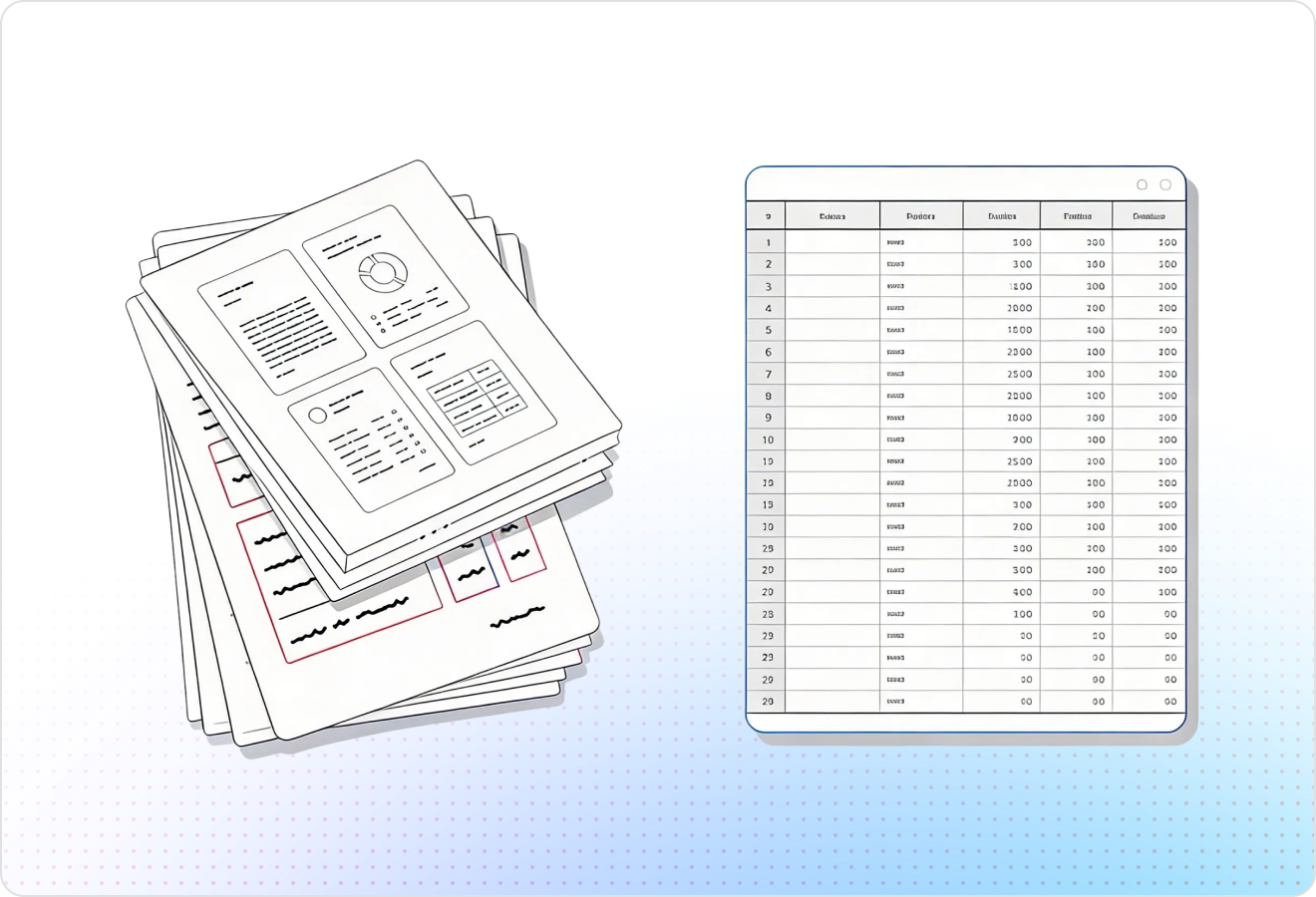
LlamaParse understands underwriting document layouts—multi-column text, headers/footers, and repeated form sections—so content doesn’t get scrambled during extraction. This makes it easier to reliably pull key fields from loss runs, bank statements, and application packages without writing brittle post-processing code.
Feature 02
LlamaParse extracts complex tables while preserving row/column structure, even when tables span pages or contain nested headers. For underwriting, this means cleaner ingestion of schedules (locations, vehicles, payroll, claims history) into downstream risk models and rule engines.
Feature 03
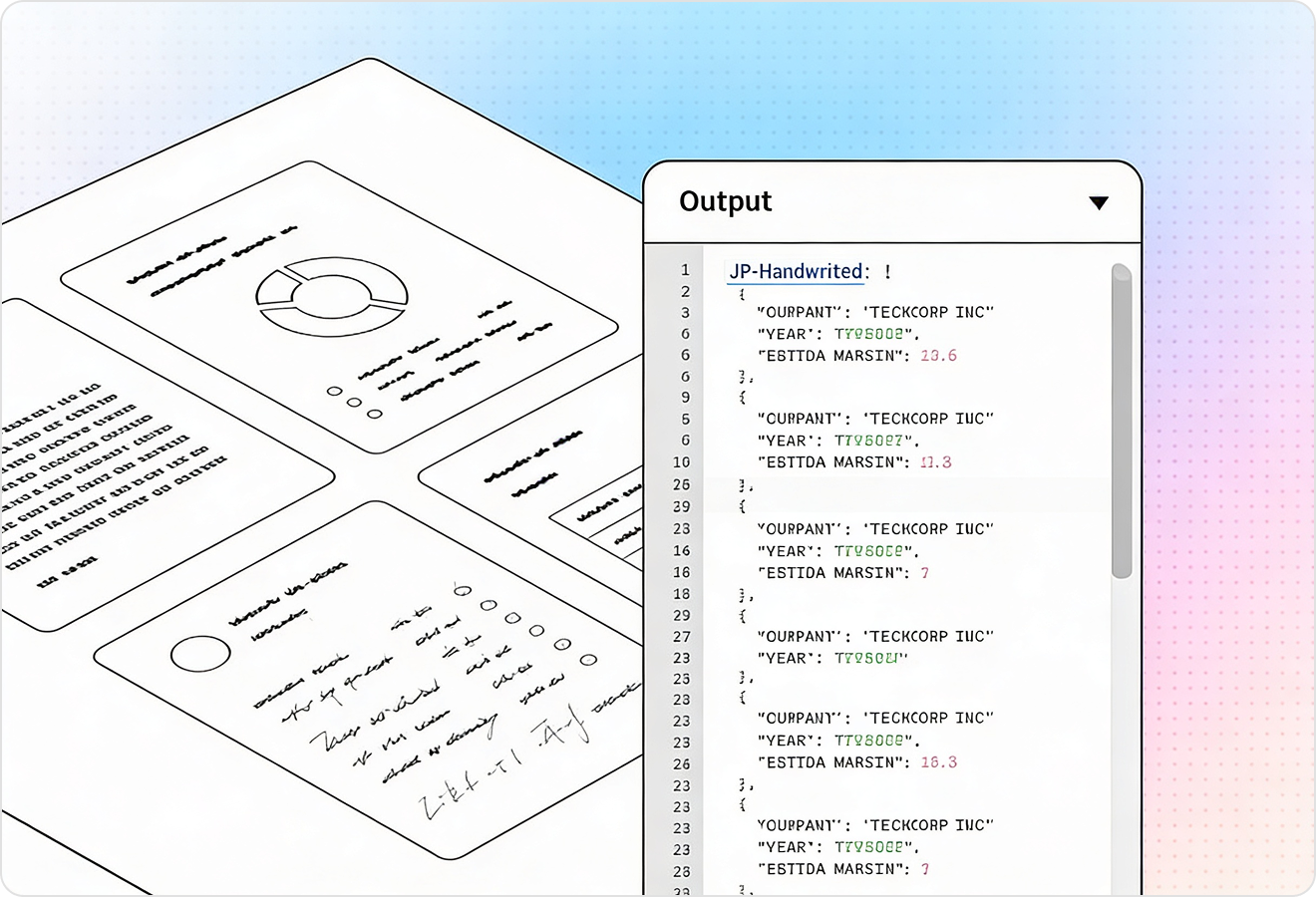
LlamaParse runs self-correction and validation steps to catch common scan and parsing errors before returning results. Underwriting teams get higher straight-through processing on noisy PDFs, reducing time spent on manual QA and exception handling.
Feature 04
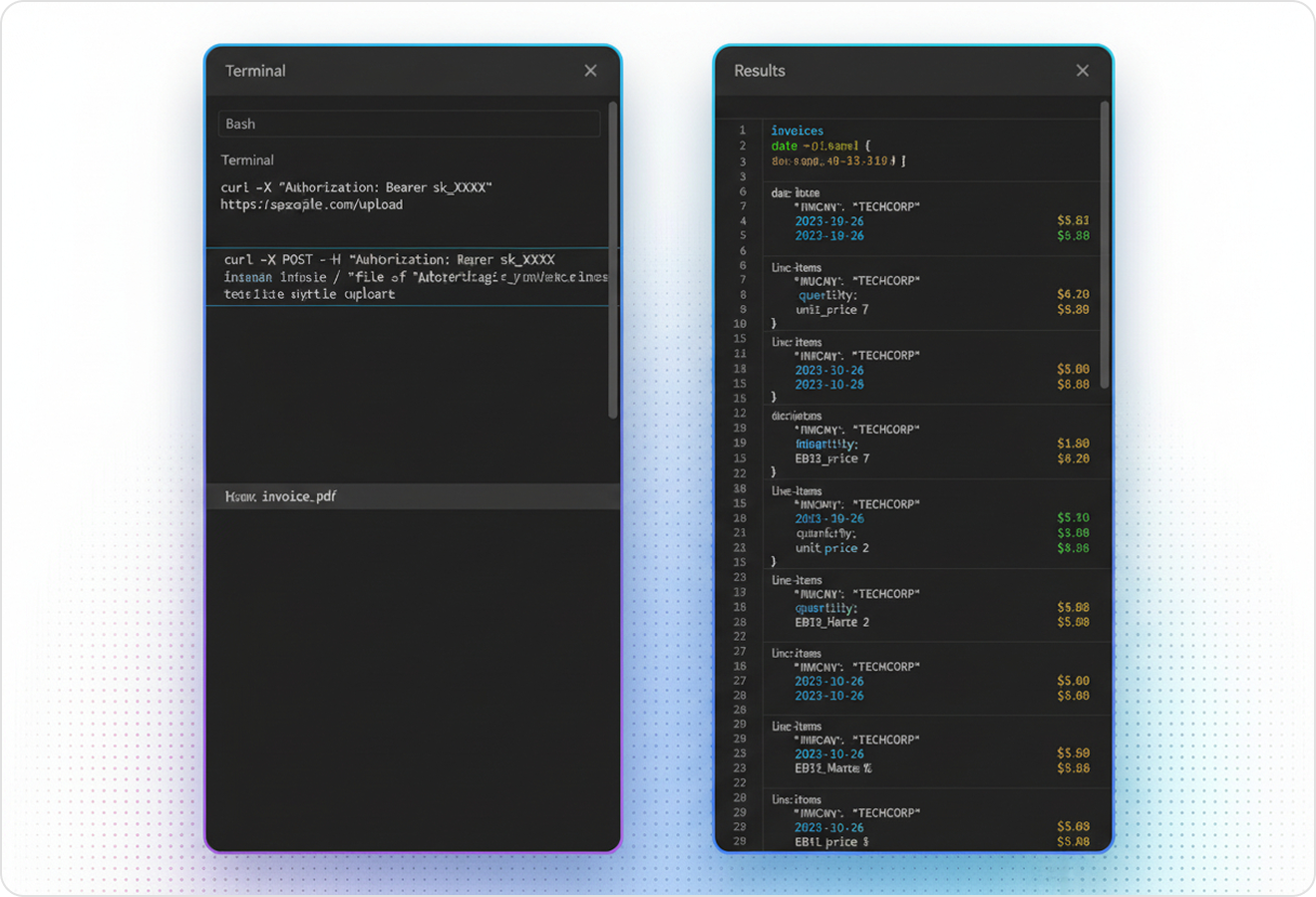
LlamaParse can return structured JSON along with granular metadata like page references and coordinates for extracted elements. That traceability supports underwriting audit requirements by letting reviewers verify every extracted value against the original source in seconds.
Technical OCR documentation
Explore our developer guides to easily connect your document pipelines to LlamaParse.
Explore the framework

Our AI catches the typos that tired eyes miss.

Export to Excel, JSON, XML, or directly via API.

SOC2 Type II compliant with end-to-end encryption.

Train the tool on your specific forms in minutes, not days.

Average processing time of <3 seconds per page.
LlamaParse’s support of a wide variety of filetypes and its accuracy of parsing made it the best tool we tested in our evaluations. The LlamaIndex team was very responsive and we were off to the races within a day.
Common FAQs
01
Yes—layout-aware parsing preserves document structure so multi-column text, headers/footers, and repeated form blocks don’t get scrambled. That means you can reliably extract key fields from loss runs, bank statements, and application packages without brittle clean-up scripts.
02
LlamaParse captures tables while preserving rows, columns, and nested headers—even when tables span pages. This produces cleaner, model-ready data for schedules of locations/vehicles, payroll breakdowns, and claims history.
03
Agentic validation loops automatically check and self-correct common scan and parsing issues before results are returned. You get higher straight-through processing and fewer exceptions that require manual QA.
04
Can we get structured JSON output that’s easy to integrate into our underwriting systems?
Yes—results can be returned as structured JSON designed for downstream rule engines, risk models, and workflow tools. This reduces mapping and post-processing time so your team can move faster from intake to decision.
05
How do we audit extracted values and prove where a number came from in the source document?
Every extracted field can include citations like page references and coordinates, so reviewers can jump directly to the exact source location. That traceability supports audit requirements and makes spot checks fast and defensible.
06
How quickly can we get to production without building a lot of custom post-processing code?
Because layout and table structure are preserved and outputs are already normalized to JSON, most teams avoid months of brittle rules and document-specific hacks. You can start with a pilot on your highest-volume document types and expand as confidence and coverage grow.